
Contact UsCONTACT
Please feel free to contact us if you have any questions or concerns.
Inquiry Form
Stories
STORIES
SERIES EMBARK
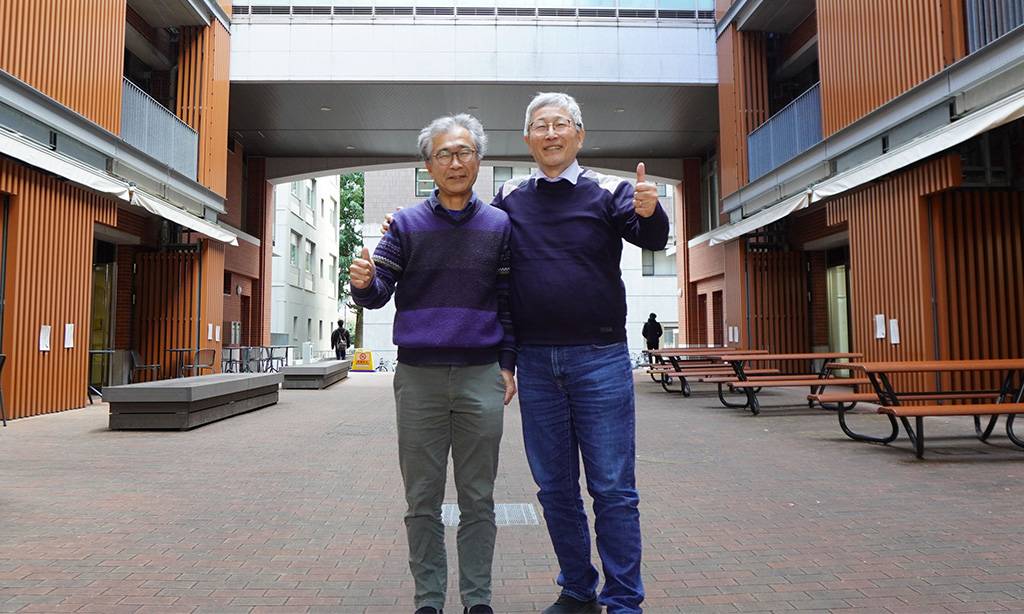
Boron Neutron Capture Therapy (BNCT) is a type of radiation therapy for cancer. RadioNano Therapeutics, established in April 2025, is a drug discovery venture that uses boron-rich nanoparticles to develop and commercialize a new BNCT drug that is expected to have a higher therapeutic effect than conventional drugs. RadioNano Therapeutics is a drug discovery venture that uses boron-rich nanoparticles to develop new BNCT drugs that are expected to be more effective than conventional drugs and aims to commercialize them. We interviewed Masatoshi Chiba, president and CEO of the company, who is conducting clinical trials to bring the drug to market, and Naoki Komatsu, a professor at Kyoto University's Graduate School of Human and Environmental Studies and the company's outside director and scientific advisory board member, who was responsible for the invention of the drug, about the development process and its progress.
(Interviewer: Mizuho Takita)
I am a graduate of the Faculty of Engineering at Kyoto University, and after working as an assistant at the Faculty of Science, I joined Shiga University of Medical Science as an associate professor. In about 10 years, I established a technology to coat the surface of various nanoparticles with hydrophilic polymers so that they dissolve well.
I arrived at Kyoto University in 2015. Soon after, I learned about a cancer treatment called BNCT, which selectively destroys cancer cells using a nuclear reaction between boron and neutrons. Kyoto University has a nuclear reactor facility called the Institute for Integrated Radiation and Nuclear Science, and there was a professor there, Minoru Suzuki, who is known as a major figure in BNCT research. I thought that if I packed boron into the nanoparticles I had been working on, I could make an excellent drug, so I started a joint research project with Professor Suzuki. As a result, we were able to develop "RN-501," a boron-rich nanoparticle coated with a hydrophilic polymer.
Around that time, I met Hiroyuki Ueno, Director of the Kyoto-iCAP Investment Department II, through one chance encounter. He was interested in this research, and we had regular discussions and suggestions. In the process, we came to the conclusion that we should start a business with the aim of social implementation, and in April 2025, we established a company.
After receiving my Master's degree from the University of Tokyo's Faculty of Pharmaceutical Sciences, I joined a general chemical manufacturer as a researcher in the pharmaceutical business. There I was involved in CMC (Chemistry, Manufacturing and Control. I was involved in the research and development of optimal manufacturing processes and quality testing methods for active pharmaceutical ingredients and drug formulations, and worked for a long time on the research and development of bioactive substances up to their transformation into pharmaceutical products.
It is not easy to take the seeds of a new drug and perfect them as a product. Even if a compound seems to have strong medicinal properties and could be an excellent drug, it often has poor physical properties, such as insolubility in water or poor chemical stability, for example. From among the compounds found by researchers, those with suitable physical properties to be used as pharmaceuticals are selected, and the compounds are made into pharmaceuticals while overcoming various problems. I have been engaged in the work of bringing pharmaceuticals to the world for a long time, including accelerating development and improving the probability of success.
The company I joined became Mitsubishi Tanabe Pharma Corporation after five mergers, and I retired in March 2023. I was involved in the work of an anti-cancer drug development venture run by a senior colleague, and it was there that I became interested in company management and starting up ventures. It was then that I was approached by a recruiter who told me that there was a drug discovery venture for which Kyoto iCAP was looking for a manager. I was very surprised when I heard about the research and was shown the data. "RN-501" developed by Dr. Komatsu and Dr. Suzuki has a strong anti-cancer effect and is safe. In addition, it is expected to induce cancer immunity. Immediately, I thought, this sounds very interesting! I want to spread it as a new treatment method! And here we are today.
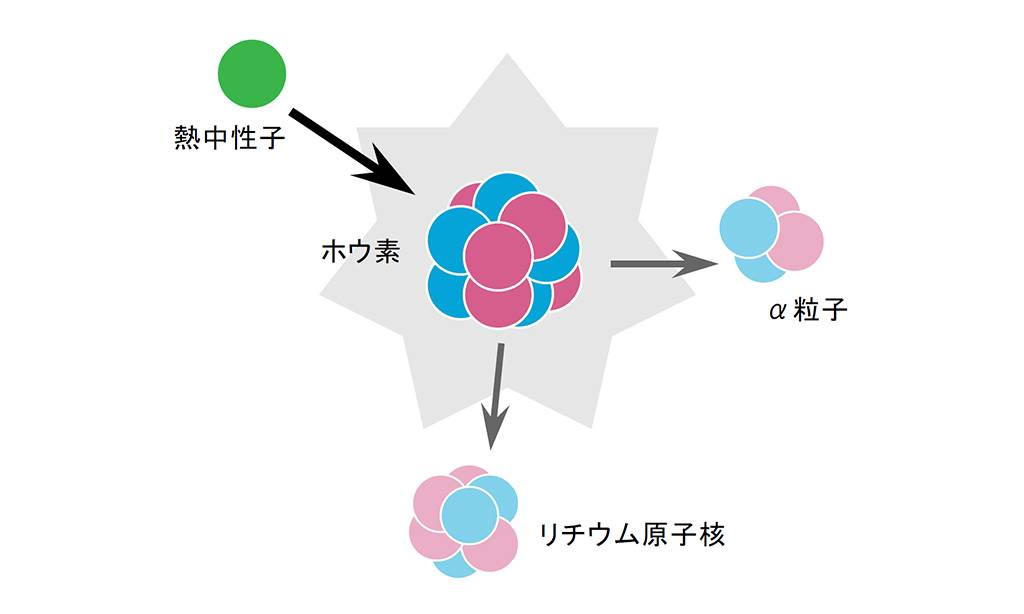
BNCT is a type of cancer radiation therapy that uses a nuclear reaction between neutrons and boron to selectively destroy cancer cells. Boron has two stable isotopes, 10B and 11B, and 10B has a high neutron capture capacity. Therefore, we send 10B into cancer cells and irradiate them with neutrons. This causes a nuclear reaction that produces alpha particles and lithium nuclei. The alpha particles generated by the nuclear reaction destroy the cancer cells.
Neutrons themselves are harmless to the body, and if boron can be delivered only to cancer cells, it has little effect on normal cells and can effectively kill only cancer cells, making it a treatment method that is attracting attention. There are already drugs for BNCT that are covered by insurance for some cancers.
It is said that the BNCT drugs currently in use have problems in selectivity to collect boron only in tumors and retention of boron for a long time. "RN-501," which Dr. Suzuki and I developed, can solve these problems. The key point of RN-501 is that it uses nanoparticles, which contain boron and are coated with a hydrophilic polymer, that easily collect in tumors. Tumors grow rapidly, and the blood flow to carry nutrients is very active. Nanoparticles have the property of easily penetrating into such places, and inevitably tend to collect in cancer cells. By appropriately controlling the size of the nanoparticles delivered to the tumor, we have devised a way to ensure that they are selectively taken up by the tumor.
RN-501 is characterized by its relatively long residence in the tumor. The drug is introduced into the body and the neutron beam is applied when it has accumulated in the tumor. Because of its high retention, multiple neutron beams can be applied with a single administration of the drug, and it can also be applied to large cancers and cancers in the trunk of the body. It also has the advantage that it can be treated at lower doses and in shorter time than conventional drugs.
The hydrophilic polymer that allows nanoparticles to dissolve well in blood was discovered during my research at Shiga University of Medical Science. Actually, it took us about five years to find it, but it can be said that the steady accumulation of basic research led to the development of RN-501.
Animal experiments have shown that it not only has an effect on tumors, but may also induce immune effects and prevent recurrence.
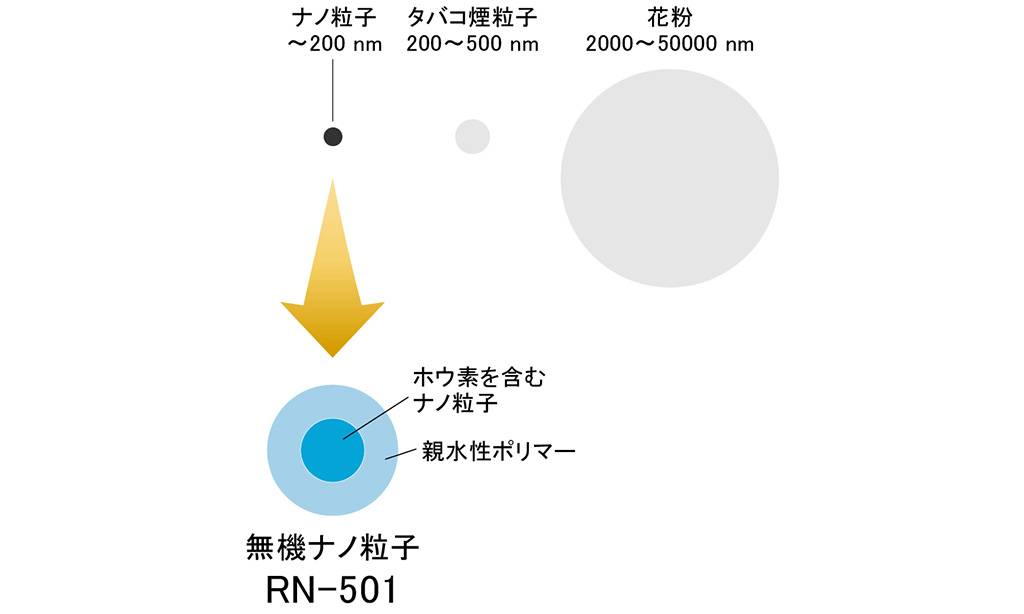
We are in the process of setting up a system for Phase I clinical trials, while pre-clinical studies are underway, with the goal of entering clinical trials in 2027. We are working with regulatory authorities that review drug development, companies that manufacture and develop neutron irradiation devices, and hospitals that conduct clinical trials. we believe that BNCT using RN-501 is universally effective, but we will focus on lung cancer, which is the most common indication among patients.
We are also in the process of developing the manufacturing process, conditions, and quality evaluation test methods for the drug's production. In fact, because RN-501 uses a special manufacturing process, it has been difficult to find a contract manufacturing company. In a nutshell, RN-501 uses a mechanochemical synthesis method to make pharmaceutical intermediates without the use of solvents, which is very unique and challenging from the pharmaceutical industry's point of view. From the pharmaceutical industry's point of view, it is very unique and challenging. I was thinking, “Is this the valley of death?” However, through the introduction of a VC, we miraculously found a company that matched our needs, and we already have a system in place to stably manufacture the drug. We believe that the Phase I clinical trial for cancer patients is an important stage for the company, and we would like to do our best.
We have set 2031 as the year when the product can be approved by the pharmaceutical affairs bodies and launched. Normally, it is said that it takes 10 to 15 years to develop a drug after the seeds are discovered. This is extremely short compared to that, so there are some difficulties, but we would like to proceed with an emphasis on speed.
Kyoto iCAP's ability to obtain as much as 600 million yen in investment at the Series A stage in 2024 is a great achievement. It is noteworthy that we were able to raise such a large amount of funds at the start of the project.
Mr. Ueno of Kyoto iCAP has been making various proposals for our research since before we started the company. Mr. Ueno is an excellent investor, but he has also built up a human network and has a keen sense of research, having worked for a pharmaceutical company. We were able to smoothly prepare for the start-up of the company, for which we are very grateful.
In the development of nanoparticle drugs for BNCT, we believe that it would be beneficial to have a way to know where the drug is in the body in real time. Since the way the drug is delivered may differ from person to person, we are researching whether we can devise some way to use nanoparticles. We will continue our efforts while placing importance on accumulating basic research.
Cancer is a disease that has yet to be eradicated. Many people have lost loved ones to cancer, and cancer treatment is a highly promising field. We would like to grow as a company that plays a role in developing new drugs and contributing to people's health and lives. Our company is a so-called "adult venture" with members of various ages, but we are all people with passionate hearts and high aspirations who are willing to take on exciting new challenges. I believe that we have no choice but to do our best, cherishing the relationships we have made with great technology and people.
I believe that entrepreneurship for a researcher depends on research results. In my case, my main business is basic research and education. I did not think that I would be so committed to starting my own business that it would interfere with my main business. I think it is important to build up basic research with one's feet firmly planted on the ground, look at the results of that research objectively, listen to the opinions of various people, and decide whether or not it is appropriate to start a business. If the seeds of something that could be implemented in society emerge, I think it is important to consult with a variety of people and go through the process of making it happen.
Whether it is technology, goods, or services, the most important thing is what value they bring to society. We must always keep asking ourselves what contribution our efforts can make to society. The time we have in our lives is limited. Therefore, I hope that we will use that precious time carefully and make a meaningful contribution to society through the challenge of entrepreneurship.
Starting a business is not an easy path. It involves great risk and assumes heavy responsibility. Even so, the question is whether you are prepared to carry it through to the end. No matter what happens, you must never give up, and you must finish the job until the very end. With that passion and determination, I hope you will give it your all and take on the challenge!
(Interviewed in January 2026. Affiliations, positions, etc. are as of the time of the interview)
Kyoto University is the only national university in Japan that has owned a nuclear reactor, and has continued research and development of BNCT for about 50 years. Although the operation of the research reactor (KUR) will be terminated in May of this year, RN-501 and radio-nanotherapeutics were created as one of the results of this longstanding research. Kyoto-iCAP has been promoting research and business planning with Prof. Komatsu and Prof. Suzuki through JST funded projects since before the company was founded, and has been practicing with President Chiba since its establishment. Together with the professional team, we are supporting this project to fulfill the company's mission to contribute to the health and future of cancer patients and their families.
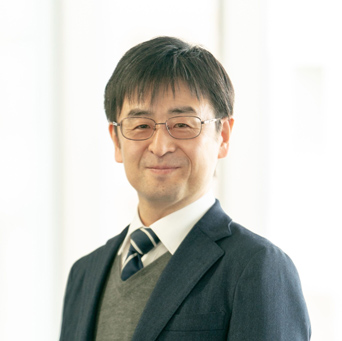
Hiroyuki Ueno

RadioNano Therapeutics, Inc.
Please feel free to contact us if you have any questions or concerns.
Inquiry Form