
Contact UsCONTACT
Please feel free to contact us if you have any questions or concerns.
Inquiry Form
Stories
STORIES
SERIES EMBARK
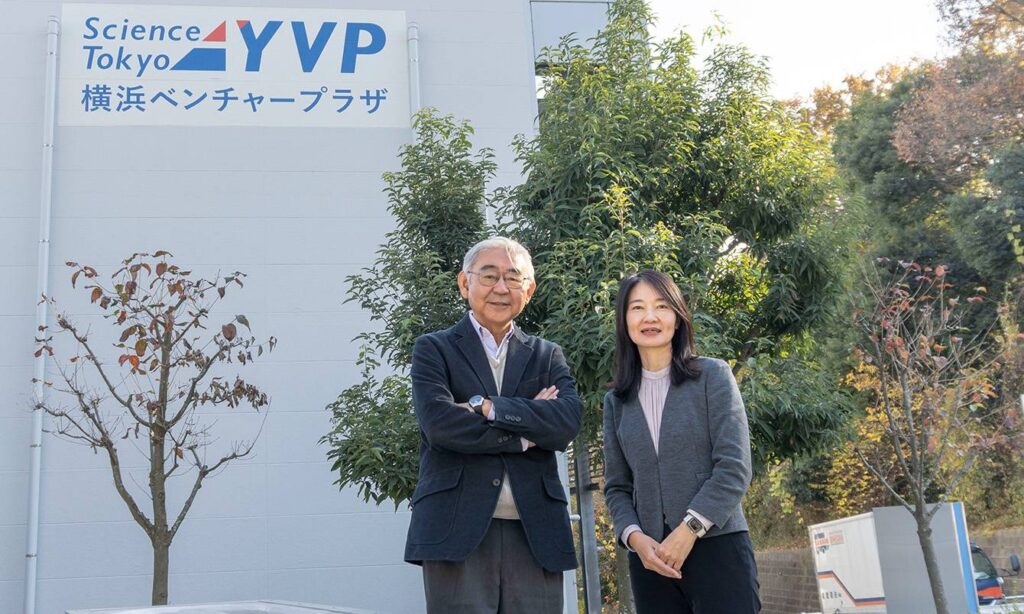
In October 2020, then Prime Minister Yoshihide Suga declared Japan carbon neutral, meaning zero greenhouse gas emissions by 2050, in his policy speech. More than five years have passed since then, and various initiatives are underway throughout Japan. One such company is Phytolipid Technologies (Yokohama, Kanagawa Prefecture), a Tokyo University of Science-affiliated startup established in 2021. The company sells technology that enables high-density cultivation of nannochloropsis, an oil-rich algae that can be used for food and fuel. We interviewed Hiroyuki Ohta, president and CEO of the company, about the background of the startup and its future prospects, and Sakiko Tsuyuzaki, chief administration officer (CAO), about her involvement in the company.
(Interviewer: Shinsuke Ogino)
I became an assistant professor at Tokyo Institute of Technology (now Tokyo University of Science) in 1991 and have been an assistant professor and then a professor for 32 years. I belonged to a basic research laboratory in the Department of Science. I was originally interested in the applied and practical aspects of research due to my background in agriculture, but when I became a professor in 2007, I expanded my activities to include practical research. Specifically, I began to aim for joint research with companies and large-scale projects with social implementation as an outlet.
The same is true of trends in the academic world, and there were whispers of complaint that Japanese research on plants, including photosynthesis, was at a world-class level in terms of fundamentals, but that the results were not easily translatable into applications. In 2010, therefore, a symposium was held with about 500 of Japan's leading botanical researchers to discuss how to link basic research to applications. The participants, all of whom were specialists with their own experimental facilities (laboratories), were truly an unprecedented rally of sorts.
I was selected as one of the five or so speakers and participated in a panel discussion. During the discussion, we talked about the so-called "valley of death.” This term refers to the barrier between the development stage and the commercialization stage, and describes the difficulty of overcoming this barrier. Development requires a large amount of capital, and failure is as damaging as a fall to the bottom of the valley.
When the question was asked, "How do you cross the "valley of death"?" I said, "I will keep moving forward even if I have to go down it. I did not have a specific plan in mind, but I was speaking out of my mouth, and since I was speaking at a gathering of rivals and fellow students from all over Japan, these words were very serious. Once you have taken on a challenge, you have no choice but to finish it. I am sure that such a feeling sprouted deep in his heart. From then to now, I still believe that this desire and mindset to finish what you set out to do is important for starting a business. The organizers were later angry with me, saying, "The purpose of this symposium was to appeal to people to build a bridge to cross the "valley of death", in other words, that we need the research funds to build a bridge...."
Immediately after that, there was an open call for applications for a research funded by JST (Japan Science and Technology Agency) called CREST (Core Research for Evolutional Science and Technology) for a project related to manufacturing with algae. The program targets large-scale research projects that transcend the boundaries between industry, government, and academia to nurture the seeds of future innovations. This must be the research fund prepared for me! I thought to myself, "This must be the research grant that has been set aside for me!
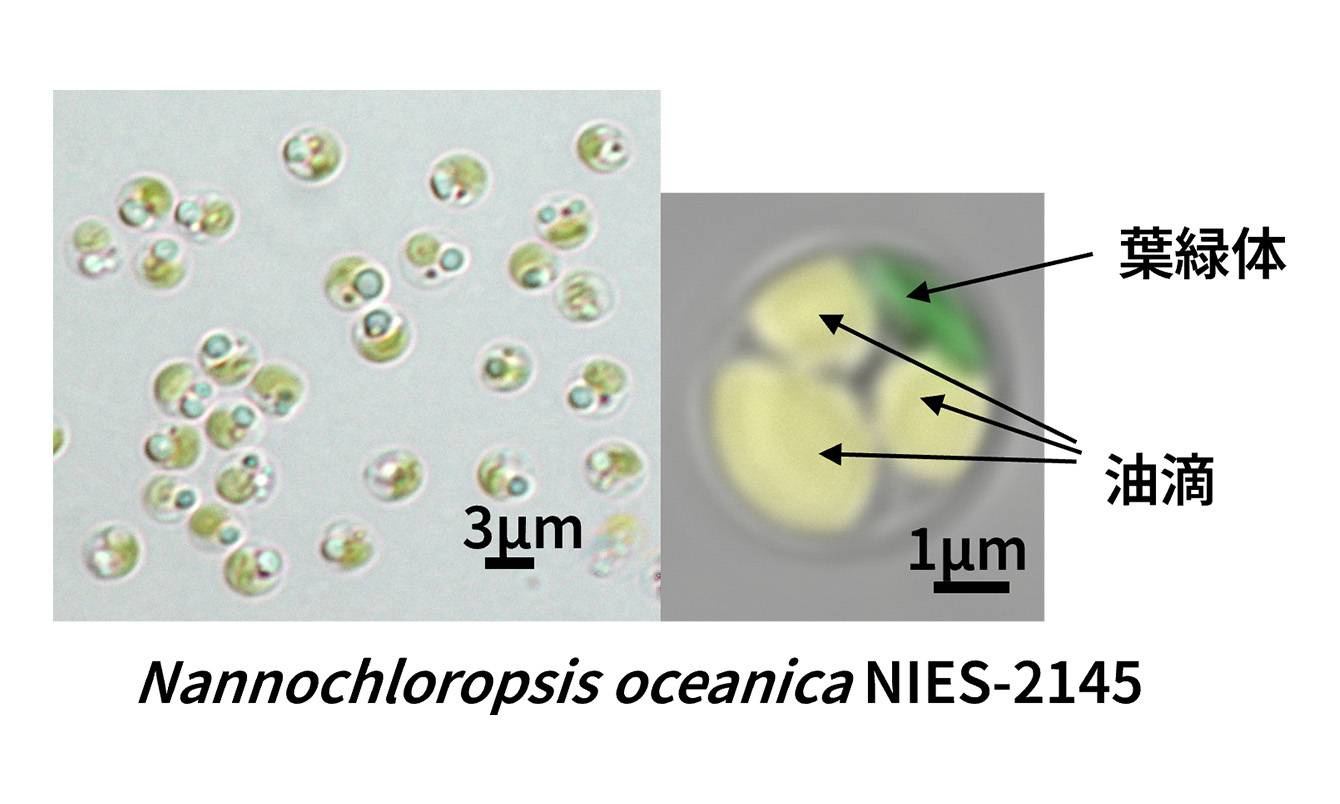
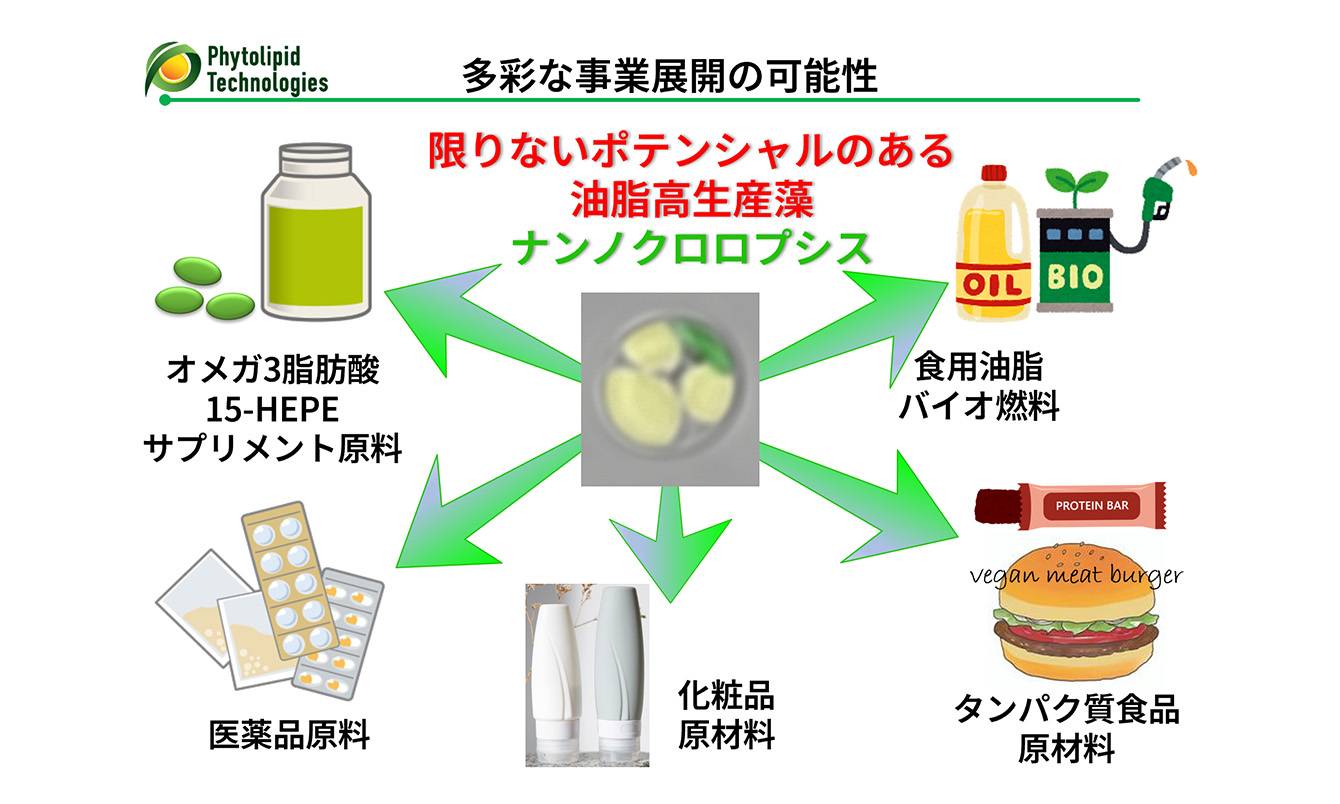
With the research money, I started working on the exit side of the business and came across an algae called Nannochloropsis, which became the fodder for my start-up business. The main characteristic of Nannochloropsis is that it accumulates a high percentage of oil and fat (up to 50-601 TP3T), which can be used as food and fuel.
In order to take the next step after CREST, I had been applying for a publicly solicited project by NEDO (New Energy and New Technology Development Organization), which supports the creation of R&D startups. On January 12, 2021, I was told by an official of the Ministry of Economy, Trade and Industry (METI), with whom I had consulted, that from now on the R&D support for the exit side of algae would be allocated to the Green Innovation Fund established under the Kan administration at that time. At that time, the Green Innovation Fund was a large-scale supplementary budget of 2 trillion yen. When I told the person I wanted to apply for the fund, he said, "Only companies can apply for this research fund. University professors are not allowed to apply.
At the time, I was a professor at the Tokyo Institute of Technology. When I heard that, I felt like I had been removed from the ladder. My dream of taking the initiative in bringing the results of research and development to the exit had dissipated. What should I do now? I thought about it all night long. I would be happy if there was a company that would take on my entire concept based on my past achievements, but there was no way such a company would exist. But I could not give up. The next day, I decided that I had no choice but to start my own business and went to consult with the staff in charge of innovation at the university.
The person in charge said, "Sir, you still need to find someone to be the president. If there is no one, I will introduce him to you. However, I had no one in mind, and I could not believe that the person I was introduced to would be successful, so I decided that I had no choice but to become president myself. However, I knew that I could not run a company by myself, so I asked a researcher I had been working with at the university if he would help me with the company. I realized for the first time that such things are crucial.
When I was looking for someone suitable for the job, I found someone close to me. I was the director of the Research Support Center at the Tokyo Institute of Technology, and Ms. Sakiko Tsuyuzaki was in charge of the administrative work. At the time, she was working on a non-regular basis, and due to circumstances, she was scheduled to retire in March and we were looking for her successor.
I thought he was the only person for the job, so I persuaded him to work from home for the time being, and he became the operations manager (now CAO), responsible for everything from general affairs to human resources and accounting, other than the president of the company. Without Ms. Tsuyuzaki, the company would not have been established. The company was established in April 2021.
Although I did not have daily contact with Ohta, the center manager, at work at the time, I was well aware that he was a person of good character and great personality. After quitting the company I had joined after graduating, I had been working part-time about three days a week for many years as a stepping stone back into the workforce after being a housewife for many years. I was suddenly very busy, so I bought a book titled "Small Company Accounting, General Affairs, and Personnel Manual," read it carefully, and researched it on the Internet to set up the company's systems one by one.
In establishing this company, Ohta invested all of his severance pay into the start-up fund. The company is located next to the Suzukakedai Campus of Tokyo University of Science, but there are no coffee shops around the nearest station, Suzukakedai Station on the Denentoshi Line. Ota's dream was to open a coffee shop where students could gather in front of such a station. He knew that he would be able to fulfill this dream with his severance pay, but he decided to throw it all away and start his own business in order to implement and utilize his efforts in society, even if only a little. I was struck by his ambition and enthusiasm, and decided to take on the “impossible task” of playing any role in a venture company.
Nannochloropsis contains a large amount of eicopentaenoic acid (EPA), a representative of ω3 fatty acids. ω3 fatty acids such as EPA are essential for humans to consume a certain amount in order to maintain their health. Since they are abundantly contained in fish, we consume ω3 fatty acids by eating fish. However, as the population continues to grow, an era will come in the near future when natural fish alone will not be sufficient to supply sufficient amounts of ω3 fatty acids.
So, it is not as simple as just increasing the percentage of farmed fish. Zooplankton called rotifers are used to feed cultured fish, and the rotifers are fed by Nannochloropsis. In fact, Nannochloropsis has long been cultivated on a certain scale in Japan for breeding rotifers.
However, when the demand for aquaculture increases significantly, the production of rotifer cannot keep up, and plant-derived feed is used. Since plant-derived feed does not contain EPA, EPA does not accumulate in the fish body either. We will then need to take EPA in ways other than eating fish. The more fish are farmed, the more we need to cultivate Nannochloropsis on a large scale.
Yes, we do. We call EPA from fish "Blue EPA," while EPA from algae is named "Green EPA," meaning "a substance essential for maintaining health is provided by green organisms," and we have also acquired the trademark. Moreover, Nannochloropsis contains oxylipin, a metabolic product of EPA, which is also useful for the human body. Oxylipin is a substance with higher added value than EPA, and we have named it "Green EPA+ (plus)".
We are planning to develop a variety of businesses, such as using oxylipin derived from nannochloropsis as a material for supplements, pharmaceuticals, cosmetics, etc., and converting fats and oils into edible oils and biofuels. We hope to contribute to the reduction of carbon dioxide emissions on the earth and to become carbon neutral (zero carbon dioxide emissions) by the year 2050.
The name of the company, Phytolipid Technologies, is a play on the Greek word "phyto," which means plant or algae, and "fight," which means to fight. Lipid" means lipid in English. Our unique technological capabilities to maximize the potential of Nannochloropsis are our company's distinctive characteristics, and this meaning is incorporated in the word "Technologies".
In the end, we did not apply for the Green Innovation Fund. However, that percentage decreased year by year, and we had to come up with our own funds to cover the decrease, but we realized this only a month before the application deadline. We couldn't come up with the funds, so we gave up in tears.
Most recently, I applied for the SBIR program (Small and Medium Business Innovation Research and Development) from the Ministry of Agriculture, Forestry and Fisheries, but was rejected in October 2023. I thought I would be fine, so when I heard the news, I felt as if I had fallen into an abyss (laughs). The amount of the application was 3 billion yen. Although there were some companies that invested little by little, it was not enough to continue business development. It was Kyoto University Innovation Capital (Kyoto iCAP) that saved us from our predicament by leading the way in arranging a ¥220 million third-party allocation of new shares, which was realized last year. Our company, which had been wandering in the "valley of death", is now just beginning to climb the cliff.
Over the next three years or so, we would like to create prototype products such as supplements and edible oils and fats. Fortunately, we were selected this past January for a NEDO program that supports the business development of deep-tech ventures, which will enable us to accelerate this effort. By 2030, we hope to increase the size of the facility tenfold to one hectare, with the goal of an IPO in 2032.
We currently have 13 employees, but thankfully the number of young members is increasing: I am the Chief Technology Officer (CTO) at 68 years old, and my deputy CTO is 37 years old, and he is gradually leading the entire team in terms of technology. We had very few people who understood business and sales, but thanks to the efforts of Kyoto iCAP, we were able to hire a sales person for the first time. He is 41 years old. Since people two or three generations younger than myself are now playing a central role in the company, I am ready to retire at any time, but I am still determined to climb desperately up the "valley of death" toward commercialization and the IPO.
Whatever advice I give you, I do not think it will be appropriate. The reason is that every entrepreneurship has a different pattern, and there should be an optimal approach for each pattern. In my case, when I consulted with the university's innovation center, they told me that I should set up another president, but I did not follow their advice. To this day, I still think it was the right decision for me to be the president. I believe that there is no common theory in entrepreneurship and that there is always an optimal solution that differs for each individual. I hope that aspiring entrepreneurs will find that solution for themselves.
In my case, I was supported by Ms. Tsuyuzaki and others, and without the connections I made at Tokyo Institute of Technology over the past 32 years, this company would not have gotten off the ground and started running. In that sense, I am very grateful. Now, once again, I believe that this is where we really started.
(Interviewed in January 2026. Affiliations, positions, etc. are as of the time of the interview)
While there are many leading microalgae startups in Japan and abroad, our company is learning from precedents, and at the same time, we are drawing a winning strategy because we are a latecomer to the market. President Ohta, who combines persistence, commitment, flexibility, and amiability, has a mysterious charm, and his colleagues, including the next generation of human resources, are gathering one after another.
Kyoto iCAP has high hopes that PLT will become an integral part of human and global health and will continue to support PLT.
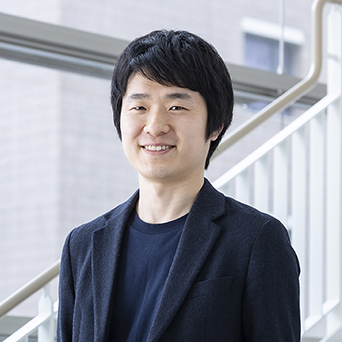
Masahiro Shinohara

Phytolipid Technologies Co., Ltd.
Please feel free to contact us if you have any questions or concerns.
Inquiry Form